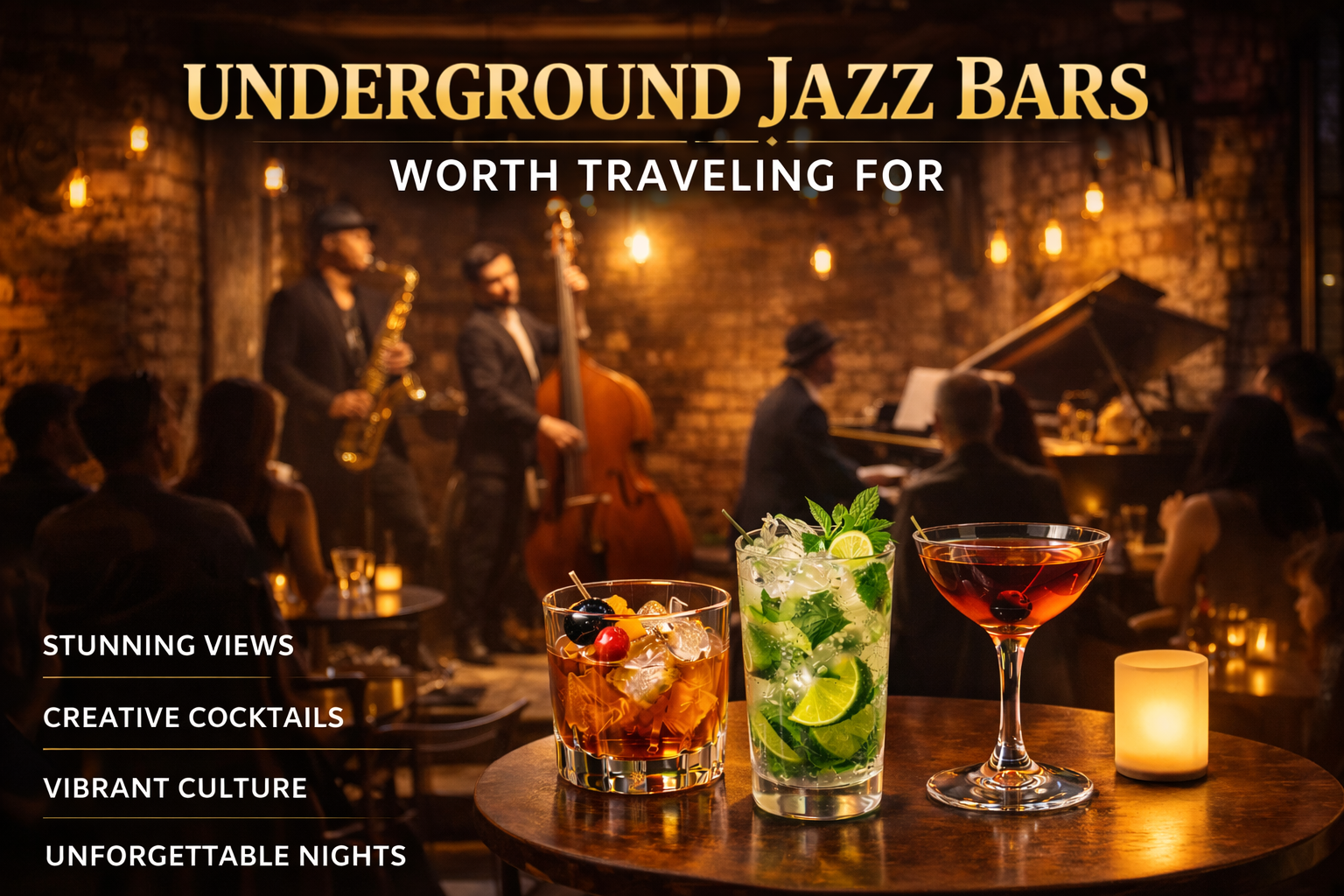
There's a particular kind of bar that combines two of nightlife's greatest pleasures: expertly crafted cocktails and live jazz. These venues exist in a sweet spot — intimate enough to feel the music, serious enough about their drinks to satisfy cocktail enthusiasts, and atmospheric enough to make an evening feel genuinely special.
Tokyo: Jazz Kissaten Culture
Japan's jazz kissaten (jazz cafes) represent a listening culture that has no real Western equivalent. In venues like those found in Shinjuku and Shibuya, patrons sit in near-silence, listening to vinyl recordings on audiophile-grade systems. The cocktails tend toward whisky-based classics, served with the same reverence as the music. It's a meditative, deeply personal experience.
New York: The Originals
Greenwich Village and Harlem still set the global standard for live jazz bars. What's changed is the cocktail quality — venues that once served perfunctory drinks now employ serious bartenders who match the musical caliber of their stages. The best New York jazz bars treat the drink and the music as equal partners in the experience.
London: The New Wave
London's jazz bar scene has undergone a quiet revolution. Venues in Soho and Dalston are combining contemporary jazz — influenced by hip-hop, electronic, and Afrobeat — with innovative cocktail programs. These spaces represent a genuinely new format that feels neither nostalgic nor gimmicky.
Bangkok: The Unexpected Contender
Bangkok's jazz scene doesn't get the international attention it deserves. The city has a deep well of jazz talent, and several intimate venues combine live performances with Thai-influenced cocktail menus. The Bamboo Bar at the Mandarin Oriental and smaller independent venues along Charoen Krung Road offer world-class experiences at a fraction of London or New York prices.
What to Look For
The best jazz bars share common qualities: intimate capacity (under 80 seats), a listening-first policy, cocktail menus that complement rather than compete with the music, and programming that balances established artists with emerging talent. If the bar is louder than the music, walk out.