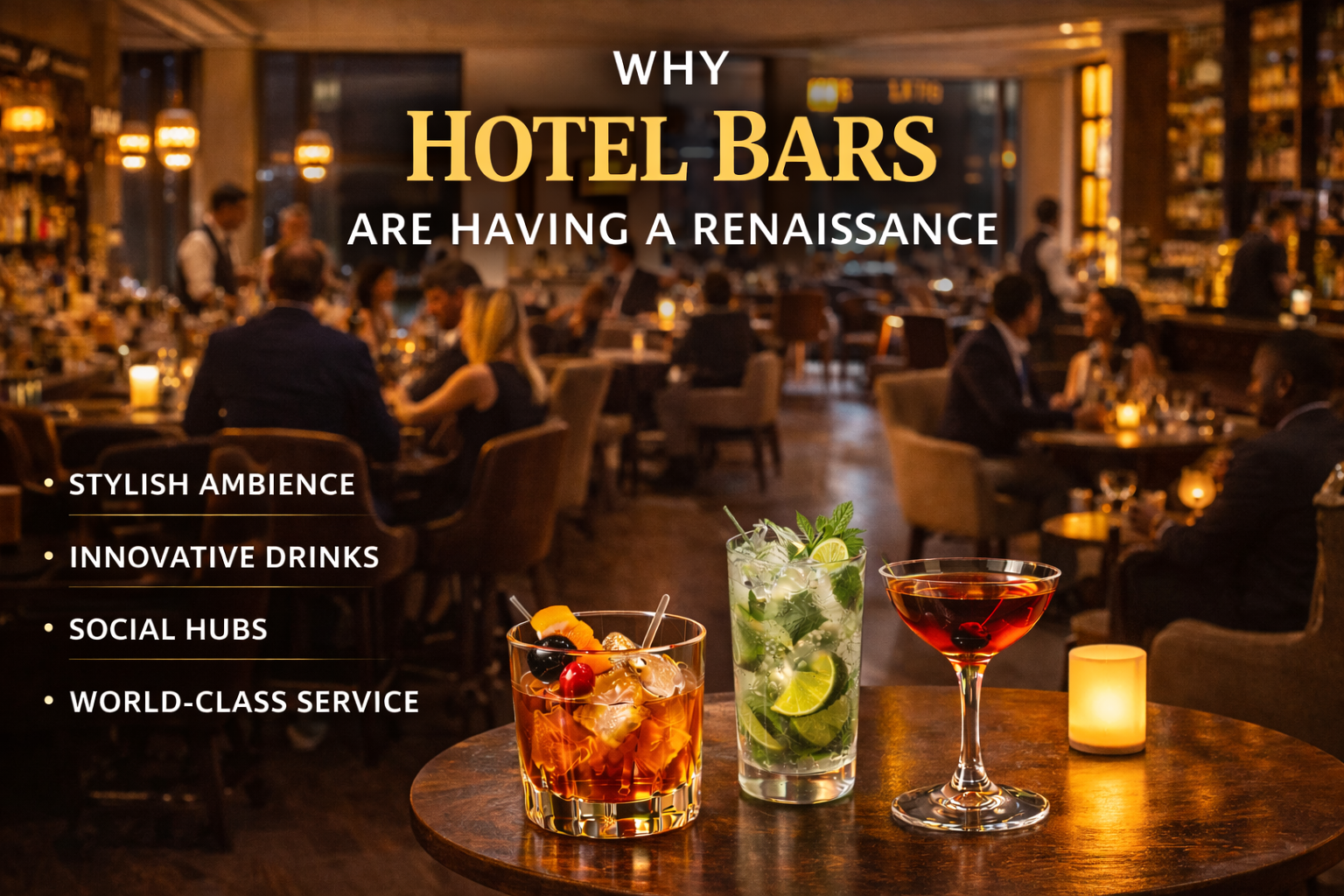
For years, hotel bars suffered from a reputation problem. They were seen as convenient but uninspired — places where business travelers nursed overpriced gin and tonics while waiting for dinner reservations. That perception is now dramatically outdated.
The Talent Migration
The single biggest driver of the hotel bar renaissance is talent. Hotels have begun recruiting top bartenders from the independent bar scene, offering salaries, benefits, and resources that standalone bars simply can't match. These bartenders bring their creativity, following, and industry connections, transforming hotel lobbies into genuine cocktail destinations.
Investment in Identity
Smart hotel brands have realized that a distinctive bar can be their most powerful marketing asset. A bar that earns a spot on the World's 50 Best list generates more press, social media content, and direct bookings than almost any other hotel amenity. This has led to serious investment in bar design, programming, and talent.
The Heritage Advantage
Hotel bars have something that most independent bars can't replicate: history. The Bamboo Bar in Bangkok, the American Bar at the Savoy in London, the Bar Hemingway at the Ritz Paris — these venues carry decades of stories, celebrity associations, and cultural significance. As noted by Forbes Travel, heritage bars are increasingly recognizing and leveraging this unique asset.
The Integration Model
The best hotel bars in 2026 are fully integrated into their local bar scenes. They host guest shifts with independent bartenders, participate in local cocktail weeks, source from regional distillers, and position themselves as neighborhood bars that happen to be in hotels. This breaks down the velvet rope mentality that made hotel bars feel exclusionary.
The Price Conversation
Yes, hotel bar cocktails are typically more expensive than their independent counterparts — often 30-50% more. But the gap is narrowing as independent bars raise prices, and the value proposition has shifted. Hotel bars offer superior service standards, comfortable seating, climate control, clean restrooms, and the ability to charge a drink to your room. For many guests, the premium is justified.
Where to Experience It
The hotel bar renaissance is most visible in Asia, where new luxury properties are opening at pace and competition for the cocktail-savvy traveler is fierce. Bangkok, Singapore, Tokyo, and Hong Kong all boast hotel bars that would be destination-worthy even without the room key. The trend is global, but Asia is where it's evolving fastest.